

Flowers of Grief
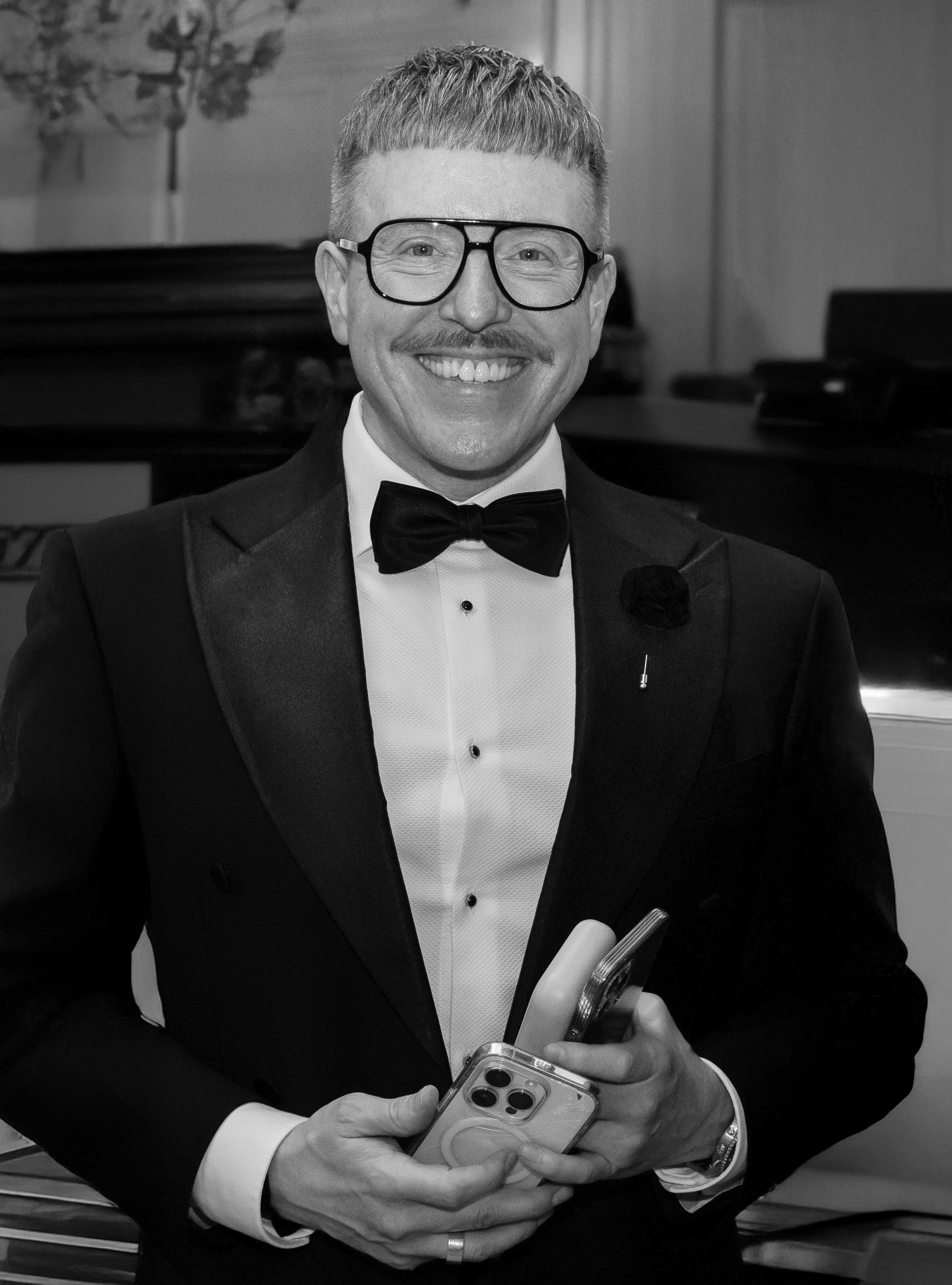

When Life Suddenly Stopped
The smell of old cotton fades slowly if you leave it long enough in the light. Adrien Van der Mierde only understood this when he washed his roommate’s shirts, one day after the funeral. They lay in a bowl of lukewarm water, as if it were a last gesture of care, one that could no longer change anything. The apartment was quiet. It was the kind of quiet that settles when someone does not come home anymore.
Back then, Adrien studied fashion. Cuts, proportions, material analysis, everything was analytical, precise, almost athletic in its discipline. But when he held his friend’s clothes in his hands, the fabric became something else. Not a material. Not an object. A continuation of a life that had stopped. He could not throw any of it away. So he began folding and cutting without intention, only from the need to create a shape that could withstand loss.
The First Flower from a Final Shirt
The first bloom came from the sleeve of a beloved shirt. Deep bordeaux, simply because the fabric happened to be that color, the edges secured with small, careful stitches. Not beautiful. Not finished. More an attempt to turn something finite into something that might stay.
He placed it in an old vase the two of them had once found at a flea market. Two people laughing though they barely had money. The flower stood there like a last trace of warmth.
A few days later, his friend’s mother visited. She saw the improvised bloom, did not touch it, but her gaze rested on it for a long time. “I would have liked to keep him that way,” she said, softly enough that Adrien was not sure if it was meant for him. The next morning he made a second one for her. She picked it up a week later and brought the shirt of her husband, who passed away years before.
That is how it began. Not with an idea. With a need.
Antwerp, a Backyard Atelier
Adrien left the fashion academy without paperwork or drama. He moved to a neighborhood in Antwerp that you only know if you have visited someone there. A narrow street, cobblestones, houses that have seen everything. His atelier EEUWIGE BLOEM is small, barely larger than a garage, extended roughly toward the back. In the morning it smells of coffee. In the afternoon of dust and warm fabric. And in the evening of concentrated silence.
Families visit to him with a bag full of clothing or sometimes with only a single scarf. Adrien does not ask much. He listens, holds the fabric, feels its weight, the worn places, the faint pale spots left by sun and years. Then he begins. He makes no sketches. “The fabric speaks enough,” he says.
The flowers he creates mimic real plants: dahlia spirals, curved calla shapes, the glossy, almost strange surfaces of anthuriums. But they always remain recognizably handmade. A hem appears where a vein would be, a button hides inside like a seed, a frayed edge becomes the spine of a leaf. Each flower carries the life once held in the cloth.
Eternity in a Vase
It is quiet in the atelier when he works. You hear only the scissors and the scrape of thread. Sometimes the old heater hums, as if reminding the room that time can stretch.
What Adrien creates is not a product. Not a craft trick. Not a design idea. It is an attempt to translate grief into something that does not decay, something you can hold when words are too little or too much. People take these bouquets the way you take something that accompanies you, not something that decorates.
Adrien rarely calls himself an artist.He usually says: “I work with what remains.” And perhaps that is the most honest sentence about these quiet, unfading flowers.
DWHH.art is the personal art project of Daniel Weiss – a collaboration between humans and AI. All stories and images are fictional – created with artificial intelligence, told with human imagination. For all those who believe that beauty is allowed to think.


Comments