

The Master of Sweetness
Updated: Nov 22, 2025

The Light in the Foyer
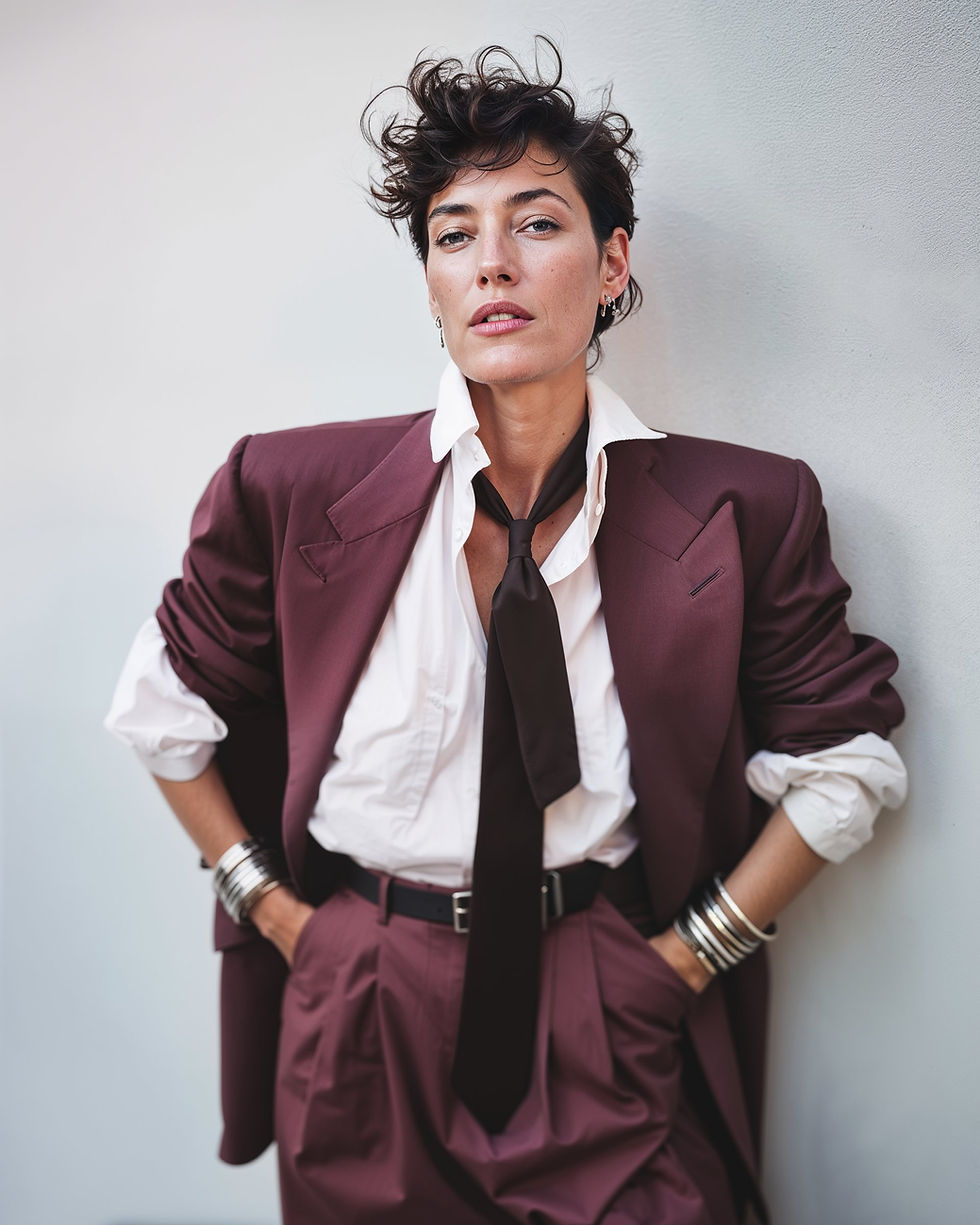
It smells of vanilla, metal, and a kind of muted tension. The experimental kitchen of the Institut National des Desserts Nominatifs, housed in the former reception hall of a Parisian government building just off Rue Haussmann, feels like a strange hybrid: neoclassical ceilings above, stainless steel under the hands. Between these two worlds moves Apolline Faure, 26, the youngest president the institute has ever had – and the first woman since its founding in 1871. A tattoo flashes beneath her crisp white jacket; around her neck hangs the broken silver scoop of her grandmother’s spoon, an old canteen utensil with its handle snapped off and its surface softly dulled by use. “You weren’t born with a silver spoon in your mouth,” her grandmother once told her, “but maybe you’ll be the one who holds it up someday.” It felt less like comfort than an instruction
The List of Names
What few people know: this institute is not a polite circle of epicureans but a place of tradition – stubborn, slow-moving, and overwhelmingly male. For decades, the naming commission was composed of the same elderly chefs. Men who treated desserts as monuments rather than as a living language. Anyone submitting a new recipe didn’t just need to persuade; they needed to endure. “During my first year, I knocked more than I spoke,” Faure says. But she stayed. She learned to read the room. She learned who listened and who didn’t. And at some point, one of the older men – half mocking, half conceding – said: “You’re more persistent than all of us combined.” Perhaps it was a compliment. Perhaps a surrender.

The Entremets Eilish
This morning a dessert sits on the steel table that looks like an argument: L’Entremets Eilish. A smooth, green, silent dome, almost helmet-like, cool in its presence. Flawless on the outside, slightly salty within – a fracture built into its core. Early on, some of the older chefs said: “This isn’t a dessert. It’s a statement.” Apolline nodded. That was the point. “You have to break it to taste it,” she had said then. Now she draws her knife across its lacquer-like surface. The dome splits without a sound, a thin line cutting the green. Steam rises faintly. For Faure, this is not a tribute to Billie Eilish but a study in perfection and rupture – like a song that only becomes alive through its tremor. And it is easy to imagine that Billie, queen of cool intimacy, would understand this chill.
The Archives of Sweetness
Once a week Faure walks down to the basement archive. Metal shelving. Wax seals. Handwritten labels. A quiet little graveyard of desserts that somehow survived. Pavlova. Sachertorte. Millefeuille. Behind every name sits a debate, a battle, a victory. She removes a paper roll, breaks the wax seal, and reads: “Named after the dancer Anna Pavlova, 1927.” Australia and New Zealand fought over the origin; France settled the name. The old men used to tell this story with pride. She reads it now differently: as a reminder that such decisions were never neutral. And never simple. “A name,” she says, “is a recipe that made it through.”

The Soufflé Abramović
Her favorite case – and her first true triumph – was the Soufflé Abramović. A dish that may only be served at the precise moment of its collapse. She once sat three hours before the oven, while behind her the commission argued about whether a dish that comments on its own disappearance could be considered legitimate. One said, “Too modern.” Another, “No one will understand it.” She stayed silent. She waited. The soufflé sank. And in the moment of its collapse, every man in the room understood what it was. The vote passed by a narrow margin – four to three. Her first victory.
The Woman with the Scoop
In the evening she no longer leaves the institute in her stiff chef’s jacket but in her black motorcycle jacket. The silver scoop of her grandmother swings lightly against the leather, a small metallic crescent catching the light of Rue Haussmann. Behind her footsteps echo the voices of men who once dismissed her – now asking her for guidance. And as she steps into the cool Paris night, you understand that “Master of Sweetness” is not the title she sought. It is the one she earned. Against resistance, against expectation, and – in some small way – against history itself.
DWHH.art is the personal art project of Daniel Weiss – a collaboration between human and AI. All stories and images are fictional – created through artificial intelligence, told through human imagination. For those who believe that beauty should be allowed to think.


Comments