

Interview with the Contessa Ludovica di Brera
Updated: Nov 16, 2025

Interview with Countess Ludovica di Brera
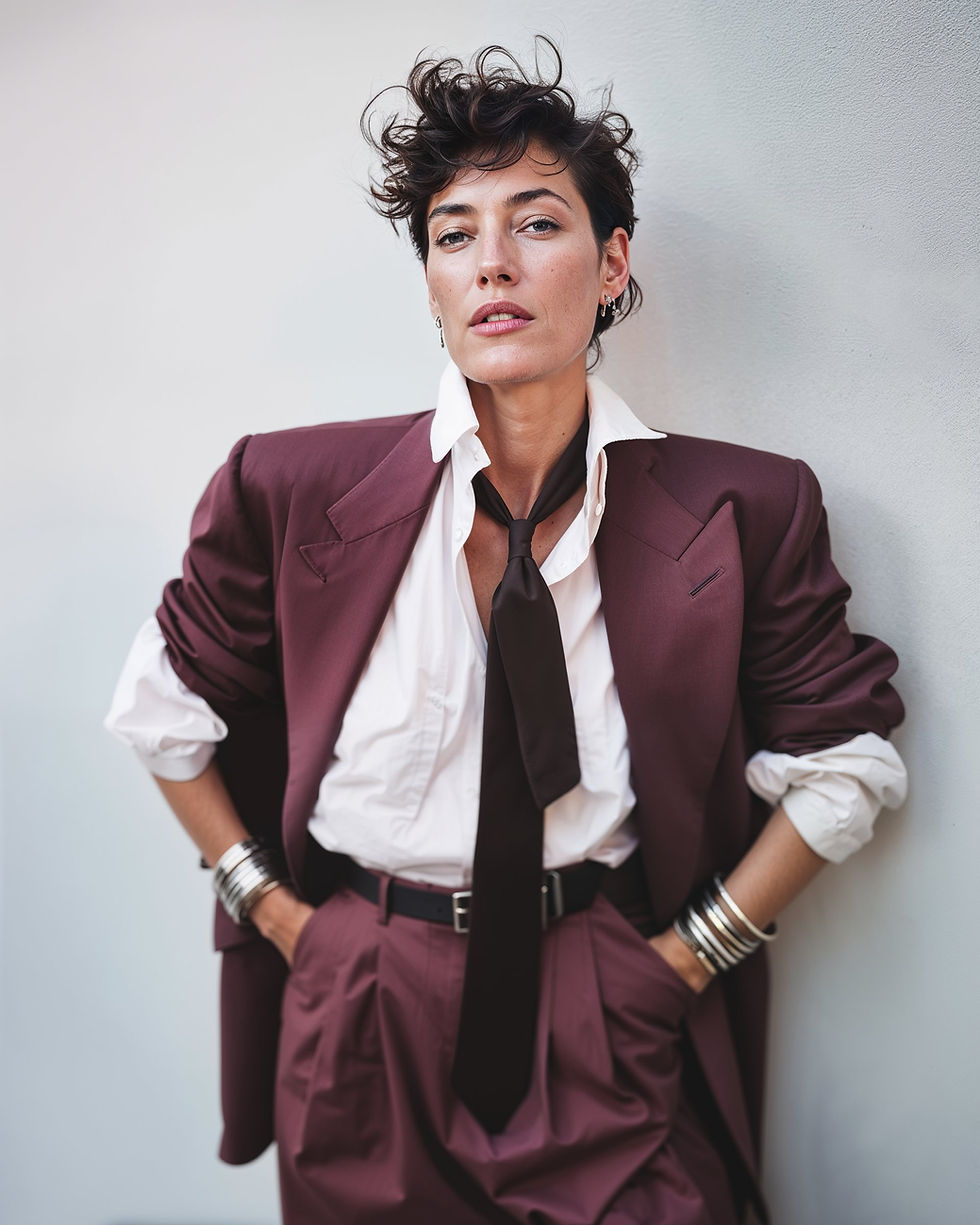
A room bathed in evening light. Porcelain figurines cast shadows on turquoise walls. The scent of wax, of of warmth, of something that never quite cools. A woman stands between the sculptures – too serene to be real, too present to seem invented.
DW: Contessa, you call your collection Gli Imperfetti . When did this passion for what others discard begin?
CLdB: Passion? No. It wasn't passion at the beginning. More like pity. I remember one afternoon at Doccia's factory; I was maybe ten. A figurine fell into the kiln. The face melted, the wings warped. My mother turned away, but I couldn't look away. I found it more beautiful because it had ceased to be perfect.
DW: So is that your measure of beauty – failure?
CLdB: Failure is a human word. I prefer material terms. Pressure. Temperature. Time. Porcelain knows no flaws, only reactions. The kiln doesn't lie. It shows what remains when the superfluous burns away.
She picks up a figurine. A horse, its head drooping as if it were tripping over itself. The glaze is cracked, its posture dignified.
DW: What does it mean to you to preserve all these objects?
CLdB: I preserve nothing. I merely give them a second public sphere. Each of these beings carries the memory of a gesture—a hand that hesitated, an oven that was too hot. I look at them and think: That's how we all are.
A brief moment of silence. Outside, the traffic can be heard, muffled by the silk curtains. Her voice fades, becoming almost impersonal.

CLdB: I used to buy perfect porcelain. Meissen, Capodimonte, Limoges. All too smooth, too perfect. At some point, I saw myself in it – without flaws, without depth. I gave it away. And started collecting things that resist smoothness.
DW: Do you think this tells us something about our time?
CLdB: Perhaps. We learned to erase flaws. In faces, in surfaces, in data. But when everything is smooth, nothing can remain. I prefer something that breaks over something that no longer touches me.
She smiles almost imperceptibly. The room seems to breathe a sigh of relief.
DW: If you were to walk into this salon today – what would you see?
CLdB: An archive of the involuntary. Things that turned out differently than they should have. I call them my witnesses. They don't tell what was planned, but what happened.
DW: And if you were a character yourself – what would you look like?
CLdB: (laughs softly) Broken, of course. But pieced back together with gold. Not to become more beautiful, but to remain visible.
A gust of wind stirs the curtain. The light flickers across her hands – they are delicate, but not shaky. On the table is a piece that resembles a dog. Or a lion. Or both. Perhaps it was both.
DW: Is there a character who means a lot to you?
CLdB: Yes. A dancer whose legs were fused together in the fire. She can no longer stand, but her expression remains. When I look at her, I think: This is the moment before you realize that beauty needs no form. Have courage.
DWHH.art is the personal art project of Daniel Weiss – a collaboration between humans and AI. All stories and images are fictional – created with artificial intelligence, told with human imagination. For all those who believe that beauty is allowed to think.


Comments