

The Emperor's Carousel

Updated: Nov 16, 2025

A relic made of wood and time
Twelve horses, carved from cedar wood, carry warriors, dragons, and mythical creatures in perfect silence. Each is different, each a guardian of a bygone era. Only one remains motionless: the Emperor's horse. Its mane shimmers with gold leaf, the saddle gleams as if someone had sat there. No emperor ever rode it, yet the wood came from the forests of the imperial palace. Perhaps that is enough to begin a legend.
Originating in the late Edo period, when craftsmanship was still a form of devotion, the carousel was never built for amusement. It was a ritual object, a wooden mandala, not intended for movement but for understanding time.

The cycle of light
Today, the carousel stands at the center of a museum in Kanazawa — a building that moves slower than anything else in the world. Every fifteen years, the building completes a full rotation on its own axis. No one notices, no visitor, no guard. And yet, the light inside changes every day. When the cycle is complete, for a single moment, a ray of sunlight shines through the circular opening in the roof and strikes the horse's golden saddle. This is the signal to the Tadayoshi family that the time has come.
The Ritual of Return
For centuries, the Tadayoshi have dismantled and rebuilt the carousel at regular intervals. They wash the wood with water from the Kenroku-en Garden spring, burn a piece of it, and replace it with new material from the same forest where the original came from. In this way, it remains both old and young, unchanged through constant renewal. The tradition follows the principle of Shikinen Sengū, ritual re-erection, which is being practiced in Japan since the 7th century. It is not an act of preservation, but of movement: the work endures because it decays.

The house that breathes time
The architect Yūta Tadayoshi, a descendant of the family, designed the new museum. It is constructed of exposed concrete, cedar, and oxidized steel—materials that are allowed to age. Half-buried in the Kanazawa landscape, half-open to the sky, the building rests on a ring-shaped platform that rotates imperceptibly. In fifteen years, it will return to its starting point. Thus, the building itself becomes part of the ritual. It is not the individual who moves through time, but rather time that moves through space. When the light strikes the saddle, the cycle begins anew.
“We wanted to create a building that is not finished,” says Tadayoshi. “Something that changes without losing itself. Once it has completed its cycle, we know that we were merely guests.” His architecture is not a monument, but a process: a balance between precision and stillness, in which the invisible plays the leading role.
The end that isn't an end
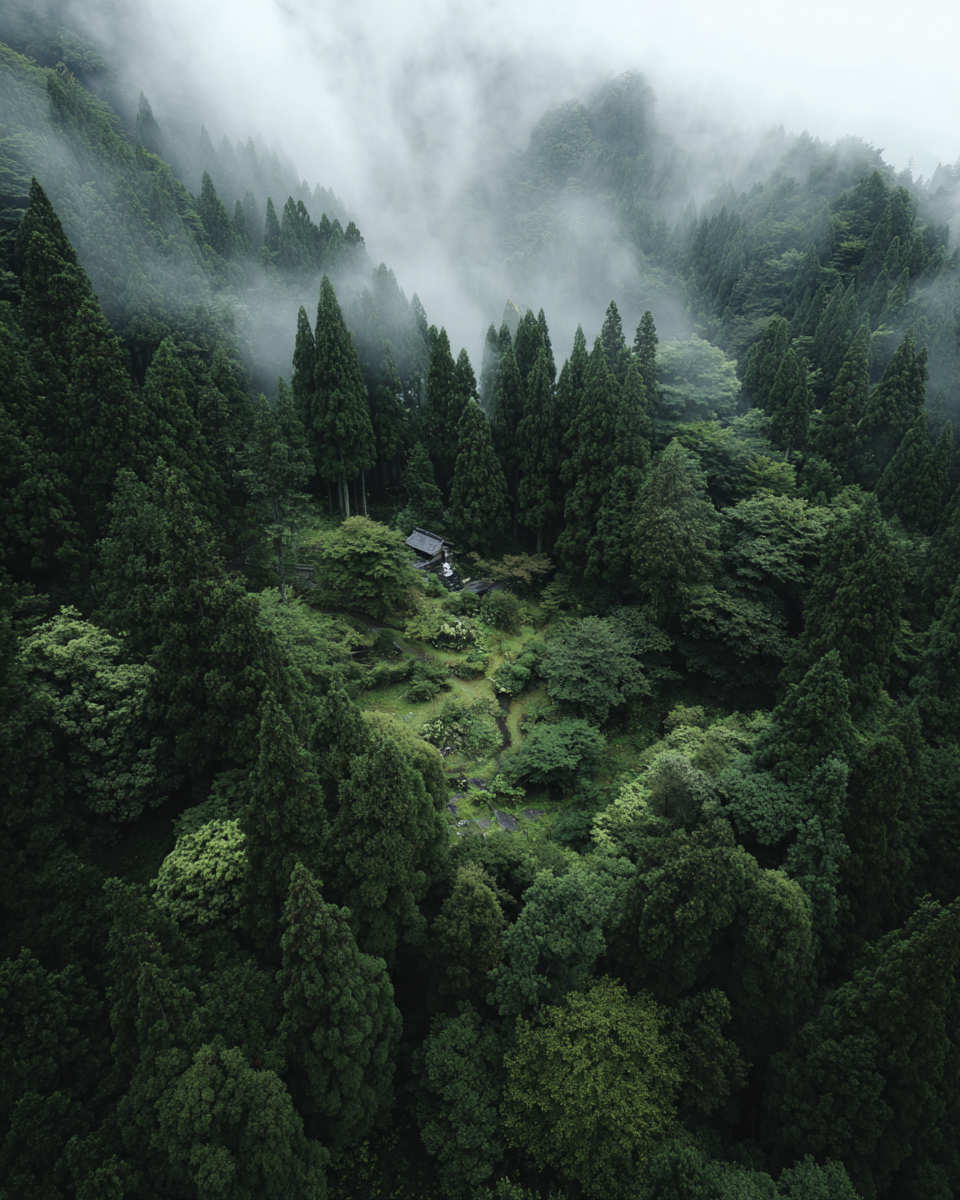
Those leaving the museum don't notice that it's moving. Only the light is different than when they entered. Outside, the Kanazawa mist is reflected in the water, the wind carries the scent of cedar and rain. And somewhere, deep in the silence, a house revolves, built to experience time—a breath that lasts fifteen years.
DWHH.art is the personal art project of Daniel Weiss – a collaboration between humans and AI. All stories and images are fictional – created with artificial intelligence, told with human imagination. For all those who believe that beauty is allowed to think.


Comments