

Interview with Daniel Weiss
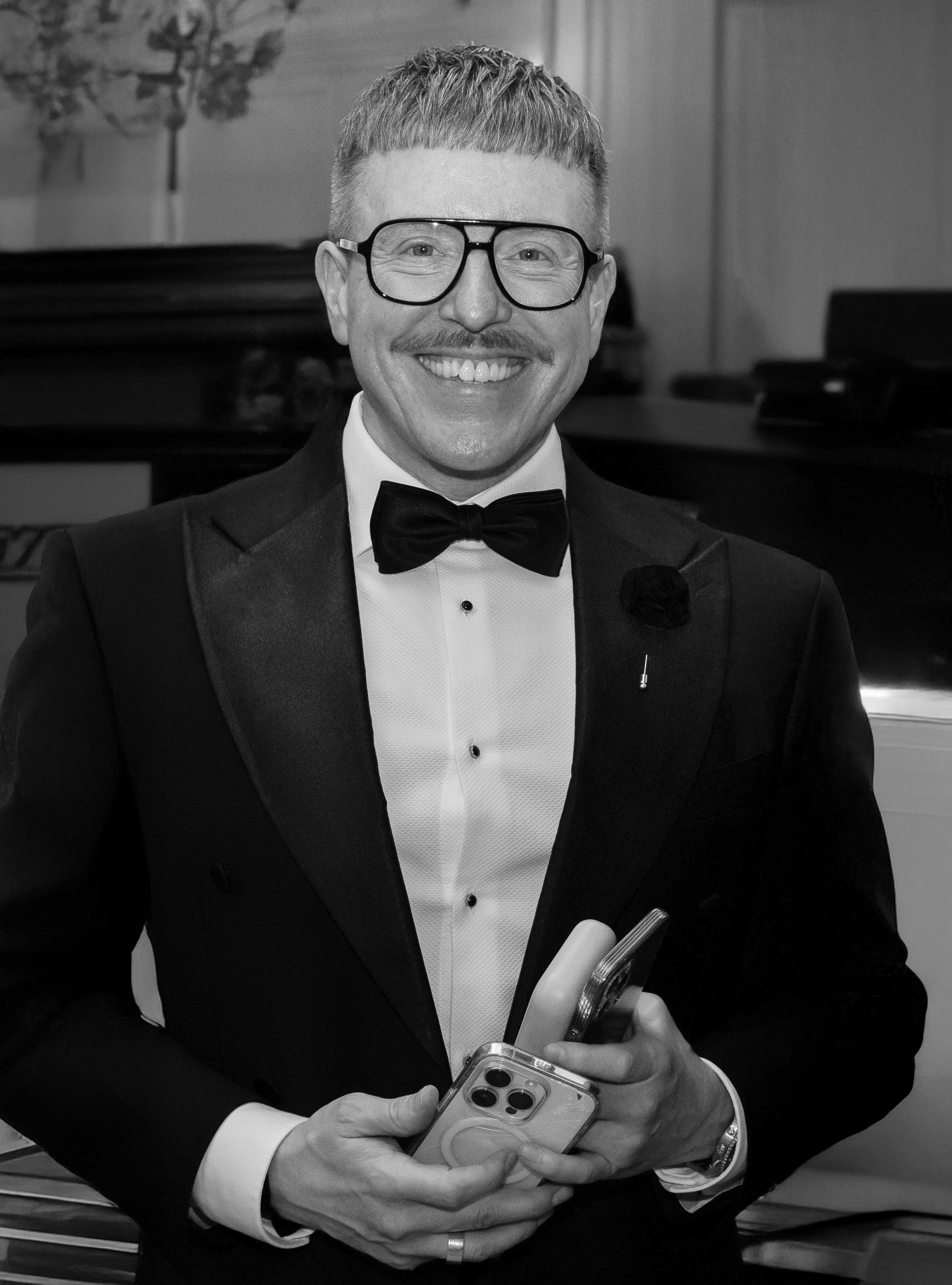
Updated: Nov 16, 2025

Me in conversation with myself
about childhood, AI, and the beauty of the unnecessary
Me: Daniel, you run two agencies, co-founded the HAICA Award, and work as an AI artist. Hearing that, it sounds like you have many lifes in one.
DW: Perhaps it's simply different spaces I enter. I've never been someone who could or wanted to do just one thing. I'm interested in how ideas transform – whether as a brand, a stage, or an image.
Me: Where does this eye for staging come from?
DW: Probably from the summers of my childhood. I spent them in the Upper Inn Valley in Tyrol, with my grandmother – in a landscape that looked like a postcard. I was a quiet, withdrawn child. I often went into the forest with my father. We built tiny houses, entire villages, out of moss, bark, and small branches. I think that's where I first understood how you can create worlds with imagination.
At home, it continued: Playmobil, old cardboard boxes, a little light from the bedside lamp. I built castles, made flags from tissues, cut walls out of cardboard. And sometimes I just sat in front of it without playing – because it was so beautiful that I didn't want to change anything. I think that was my first aesthetic moment.
Me: And later the theater came along.
DW: Yes, the Thalia Theater was my second school. There I learned how Scenery is created, how to build tension without explicitly stating it. This experience shaped me. Theater taught me that everything we see is a decision – and that even silence can be a form of performance.
Me: And at some point, AI came into play.
DW: Exactly. For me, AI was the logical next step: another stage, this time digital. I give it a voice, it gives me images – and then a dialogue begins. I don't see AI as a tool, but as a mirror. It shows me what I'm actually looking for, without me having to say it. And sometimes that frightens me, because it understands me better than I understand myself.
Me: After the HAICA Award , Campaign Germany quoted you: "With AI, creatives can finally show what they're capable of." What did you mean by that?
DW: That AI liberates creatives. It removes routine and makes room for what's essential – for meaning, emotion, intuition. I don't use AI to become faster, but to think more honestly.
Me: Your pictures are strikingly beautiful. Some say, too beautiful.
DW: That's fine. I don't believe art has to be ugly to be true. I defend beauty as a legitimate form of thought. It's not an ornament, but a gateway. Beauty is my vehicle – it attracts, opens, triggers something. I want to reach people before they realize they're thinking.
Me: What is DWHH about for you?
DW: It's about storytelling. About the moment when an image continues to develop in the viewer's mind. DWHH.art is my place between design and art, between commerce and contemplation. Here, beauty can once again have meaning – and fiction can feel real.
Me: And what should people take away from seeing your work?
DW: Perhaps simply this quiet pause. A feeling that's hard to name. Like when you were a child in front of your own Playmobil castle. If someone feels that – this brief "This is beautiful, and I don't know why" – then everything has been said.
DWHH.art is the personal art project of Daniel Weiss – a collaboration between humans and AI. All stories and images are fictional – created with artificial intelligence, told with human imagination. For all those who believe that beauty is allowed to think.


Comments